How do we keep our carbon footprint as low as possible so we can heat your plate without heating our planet?
I really enjoy what I do growing peppers and making hot sauces, but I'm also thinking of the planet we live on and how I can maintain responsible stewardship of the land and resources I'm using.
Borrowing might be a better term. I don't see my land as being a natural resource - that evokes consumption and depletion.
Rather, I see myself and what I'm doing as being one step in an ongoing cycle of extraction and renewal. If I can put back at least as much as I'm taking out, then I figure I'm doing it right and the soil itself develops into it's own entity with a lush biome of activity.
I heard an expression a while ago and it really stuck with me. There are two things you need for agriculture that you can't get back if you lose them - time and your soil.
It's often more expensive or more difficult to choose the sustainable option and do things the right way, but I look at it as actually paying the full cost of doing something rather than choosing the cheaper, plastic option that's subsidized by the future generations who have to clean up after you later on.
We're all in this together.
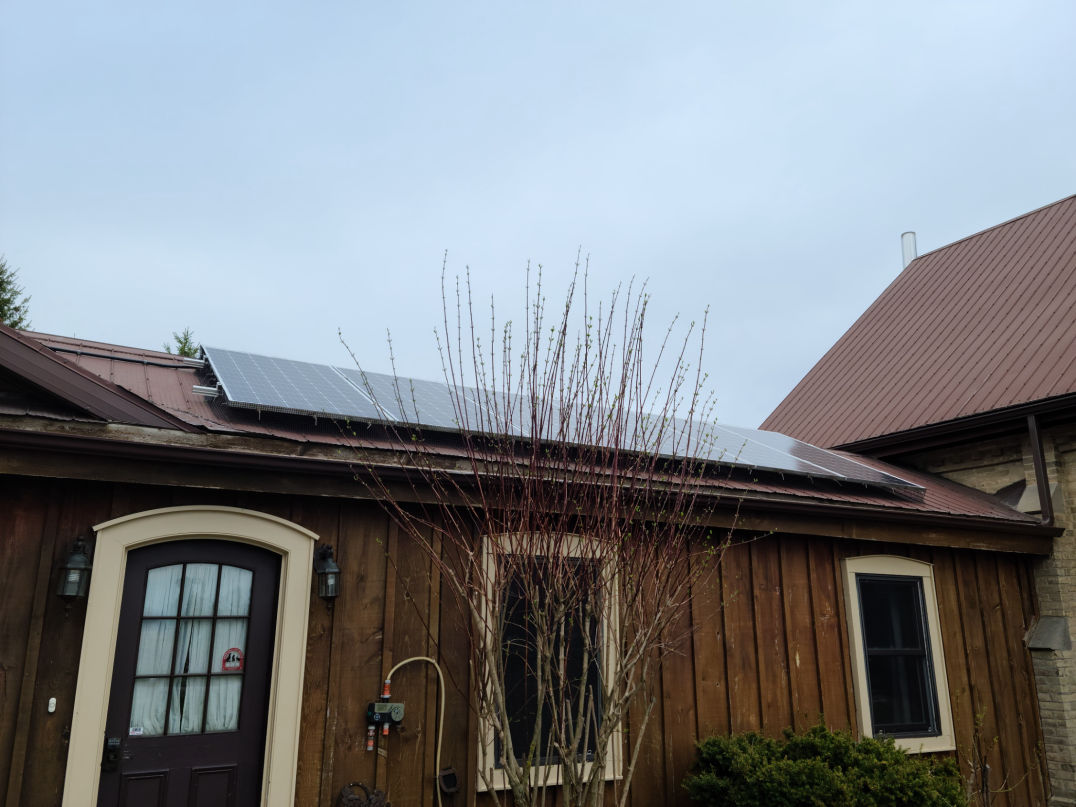
In 2018, we installed solar panels on our roof for increased self sufficiency and less draw on the traditional grid. Primarily, we use the solar to power the heaters and LED grow tents during spring, and our freezers year round.
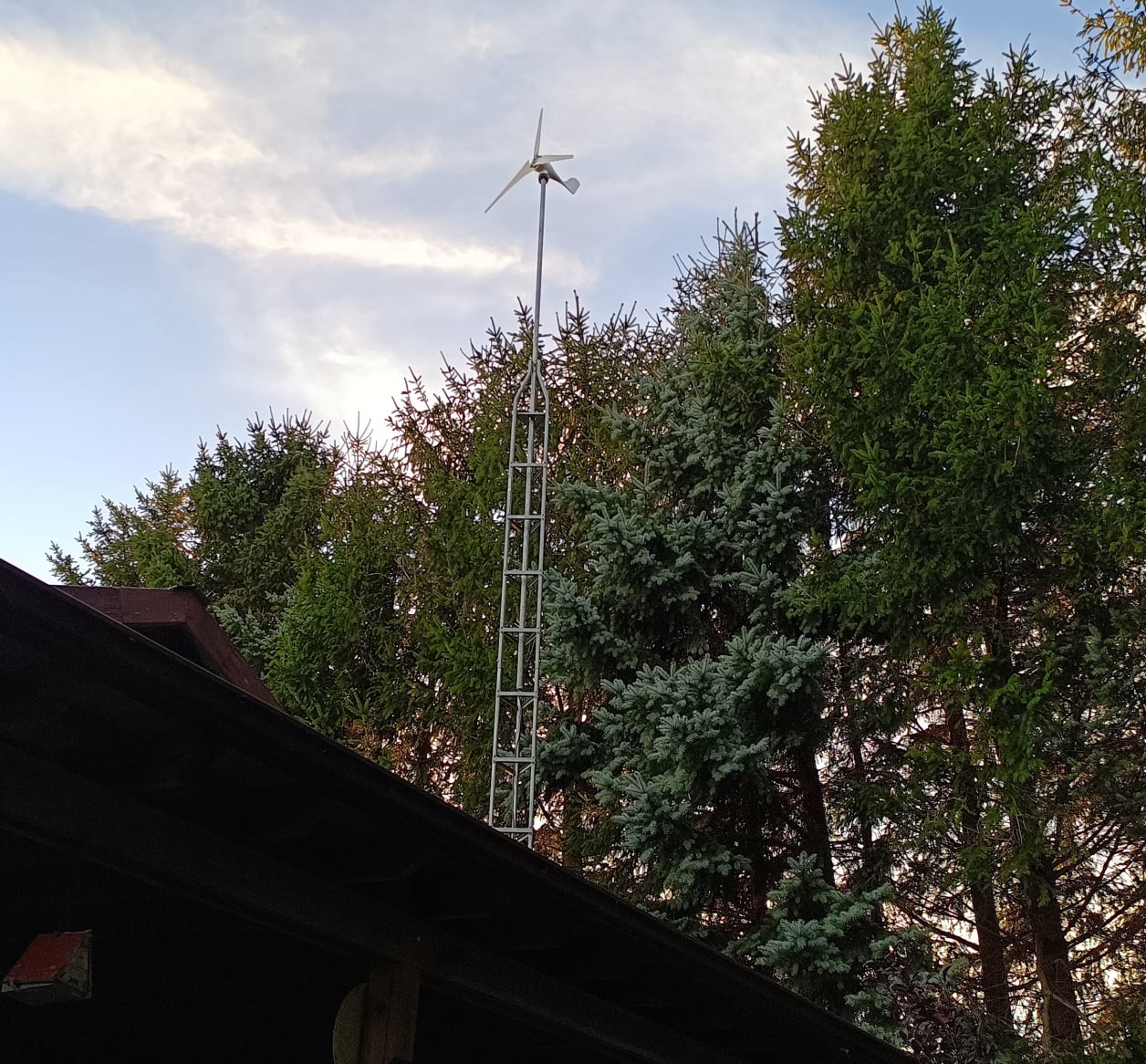
In 2024-5, we built a turbine for the Greenhouse of Extreme Regret. Our thanks to our friends at Wellington County and Experimental Acres for helping us make the idea come to life!
This gives us a low carbon way to run a couple of heaters in the greenhouses so we can extend our growing season.
Most of our equipment is second hand, either from estate and retirement auctions or from returned merchandise auctions. If we can make good use of something that someone else doesn't want, we keep something out of the landfill and don't incur the carbon footprint of having to make a new one.
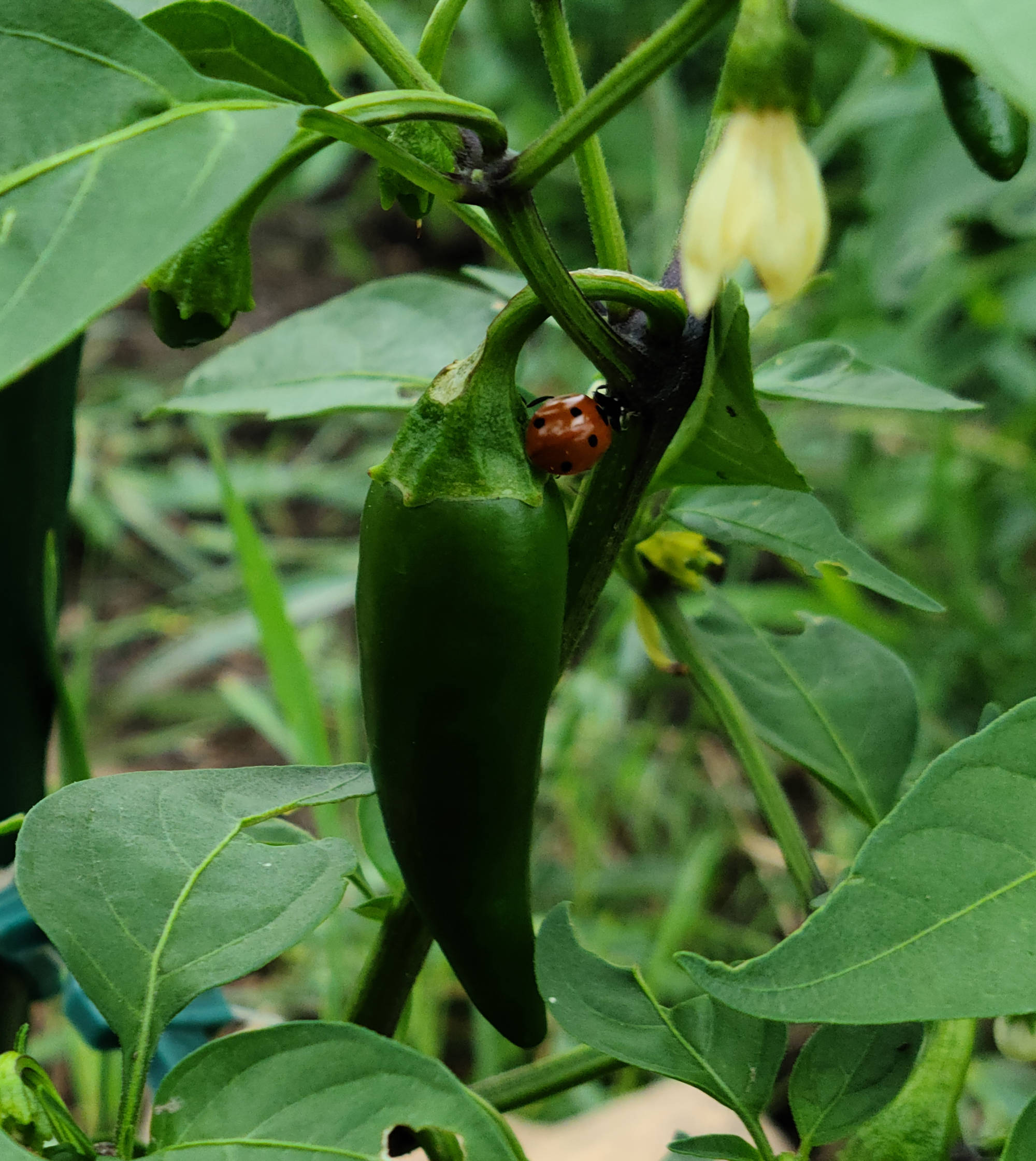
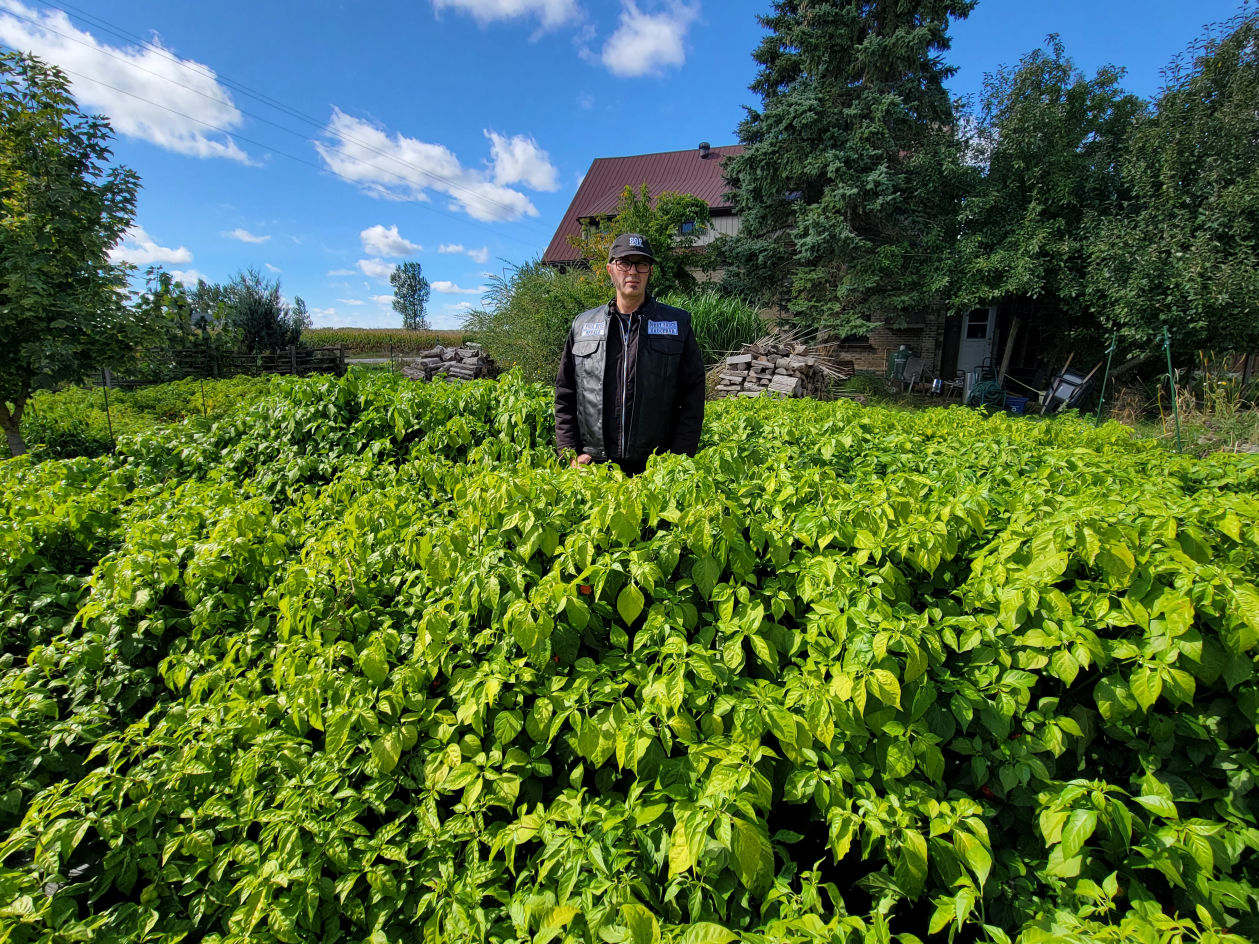
Our Garden of Apologies pepper farm uses hand tools exclusively and organic, no-till practices to keep the fossil fuels out of your food. Since 2018, we've been adding compost and fresh topsoil augmentation to our clay loam, and our 2024 testing showed that we've built a rich and nutritious biome in our soil.
Hand picking slugs and snails might be time consuming, but we're committed to avoiding pesticides.
In 2024, we signed up with the National Farmers' Union - Ontario to build solidarity with other farmers committed to land stewardship.
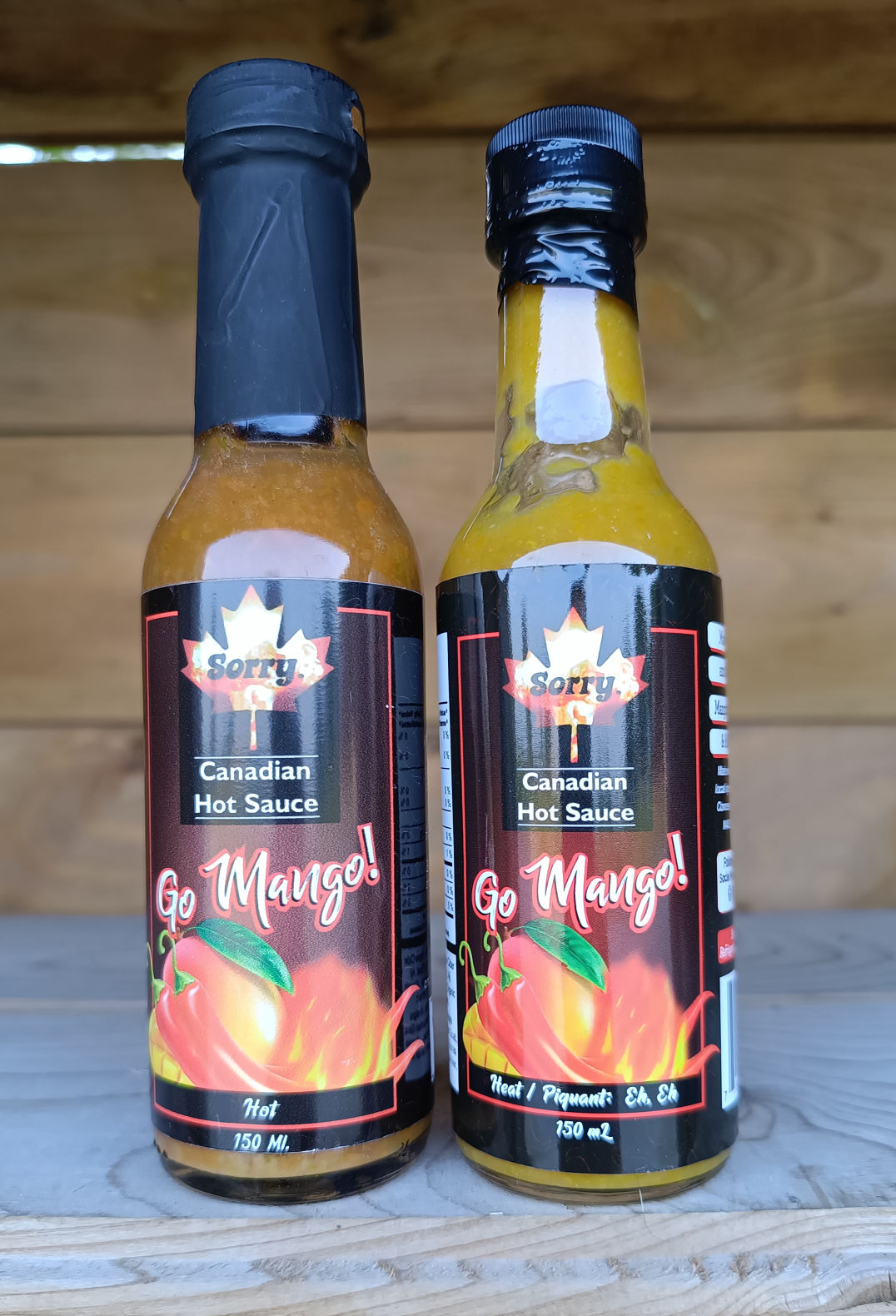
In 2021, we changed the shrink sleeves we use to finish our bottles. The new ones use 80% less plastic, and when we've used up our existing supply, we're planning to move to paper stickers for our tamper seals and get away from single use plastic completely.
We use paper-based tape and kraft paper packing material for shipping our online orders. The only plastic you'll see is a bit of clear tape for the shipping label, but we're doing the best we can.
Also in 2021, wherever possible, we switched from single use plastic caps to recyclable metal caps for our bottles. They're harder to find, so we stock up whenever we uncover a source.
In 2022, we started accepting our empty bottles back for refunds. In 2024, we increased our bottle refund from $0.50 to $1.00.
Sorry Sauce works with Canadian suppliers exclusively and almost entirely Canadian ingredients. Mangoes, limes and pineapple don't grow well in Canada but just about all of our other ingredients come from our own farm, or from our neighbours' farms. This keeps the money local and active in the community, and doesn't invoke a carbon footprint incurred when shipping things across the globe.
Thanks for coming on this crazy adventure with us!
AI Website Generator